
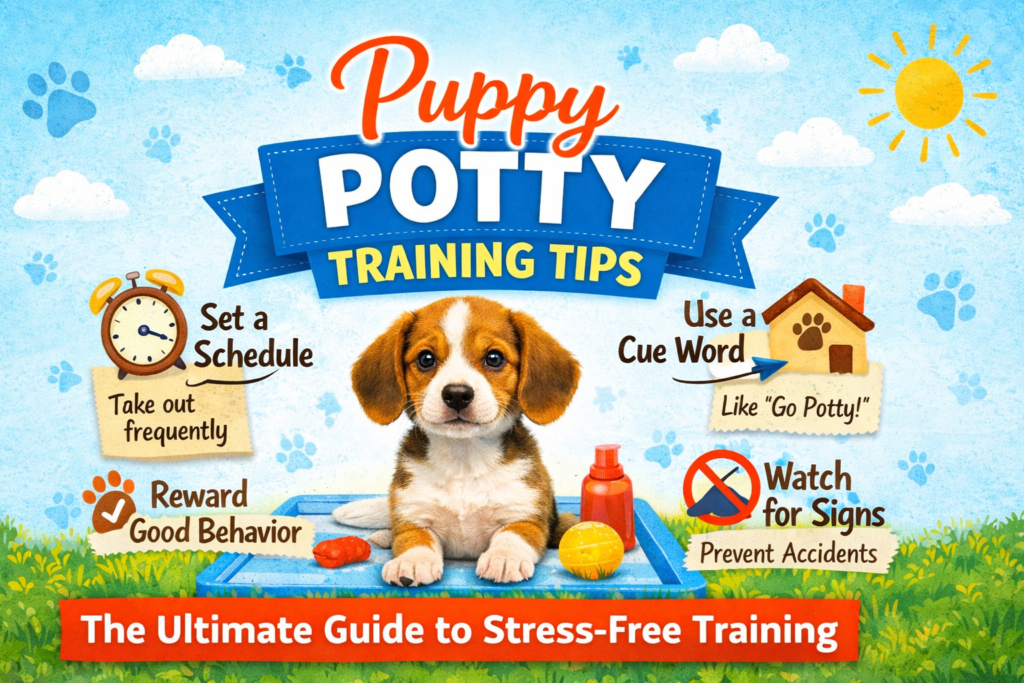
Bringing home a new puppy is exciting—but those unexpected puddles on your floor? Not so much. If you’ve ever wondered why your puppy just won’t “get it,” you’re not alone. The good news is that with the right Puppy Potty Training Tips, you can turn chaos into consistency faster than you think.
Potty training isn’t just about cleanliness—it builds trust, routine, and communication between you and your dog. Whether you’re a first-time pet parent or struggling with accidents, this guide will give you practical, proven strategies that actually work.
Understanding Your Puppy’s Behavior
Why Puppies Have Accidents
Puppies aren’t being stubborn—they’re still learning. Their bladder control is limited, and they don’t instinctively know where to go.
Key reasons include:
- Small bladder capacity
- Lack of routine
- Excitement or anxiety
- No clear training signals
Understanding this helps you stay patient and consistent.
When Do Puppies Need to Go?
Timing is everything in how to potty train a puppy fast. Most puppies need to go:
- Right after waking up
- After eating or drinking
- After playtime
- Every 1–2 hours (for younger pups)
Recognizing these patterns is the first step toward success.
Step-by-Step Puppy Potty Training Tips
Step 1: Create a Consistent Schedule
A routine is your secret weapon. Take your puppy out at the same times every day.
Example schedule:
- Morning wake-up
- After each meal
- Before bedtime
- Every couple of hours in between
Consistency helps your puppy learn faster and reduces accidents.
Step 2: Choose a Designated Potty Spot
Always take your puppy to the same place. This builds a strong association.
Pro tips:
- Use a leash to guide them
- Avoid distractions
- Be patient and give them time
This is one of the best best potty training routine for puppies strategies.
Step 3: Use a Cue Word
Say a simple phrase like “Go potty” every time they eliminate. Over time, your puppy will associate the command with the action.
Step 4: Reward Immediately
Positive reinforcement works wonders.
Reward your puppy with:
- Treats
- Praise
- Gentle petting
Timing matters—reward within seconds for maximum impact.
Step 5: Supervise Indoors
When inside:
- Keep your puppy in sight
- Use a crate when unsupervised
- Watch for signs like sniffing or circling
This is especially helpful for puppy potty training schedule for beginners.
Common Mistakes & Expert Tips to Avoid
Mistakes That Slow Down Training
Avoid these common errors:
- Punishing your puppy after accidents
- Inconsistent schedules
- Not cleaning accidents properly (use enzyme cleaners)
- Giving too much freedom too soon
These mistakes can confuse your puppy and delay progress.
Expert Tips for Faster Results
Want to speed things up? Follow these:
- Stick to a feeding schedule
- Limit water before bedtime
- Use crate training effectively
- Stay calm and consistent
These are essential tips to stop puppy accidents indoors.
Safety & Hygiene Tips
- Always clean accidents thoroughly to remove odor
- Avoid harsh chemicals near your puppy
- Ensure the potty area is safe and secure
A clean environment reinforces good habits.
FAQs
1. How long does it take to potty train a puppy?
Most puppies learn within 4–6 weeks, but consistency is key.
2. Should I wake my puppy at night to potty?
Yes, especially for young puppies. Gradually reduce nighttime trips as they grow.
3. What if my puppy keeps having accidents?
Revisit your schedule, increase supervision, and stay patient. Training takes time.
Make Training Even Easier
Want a customized routine based on your puppy’s needs? Try this free tool:
👉 https://dogcalchub.com/tool/dog-potty-training-calculator/
It helps you create a perfect potty schedule in seconds!
Conclusion:
Potty training doesn’t have to be stressful. With the right Puppy Potty Training Tips, a consistent routine, and a little patience, your puppy will learn faster than you expect.