
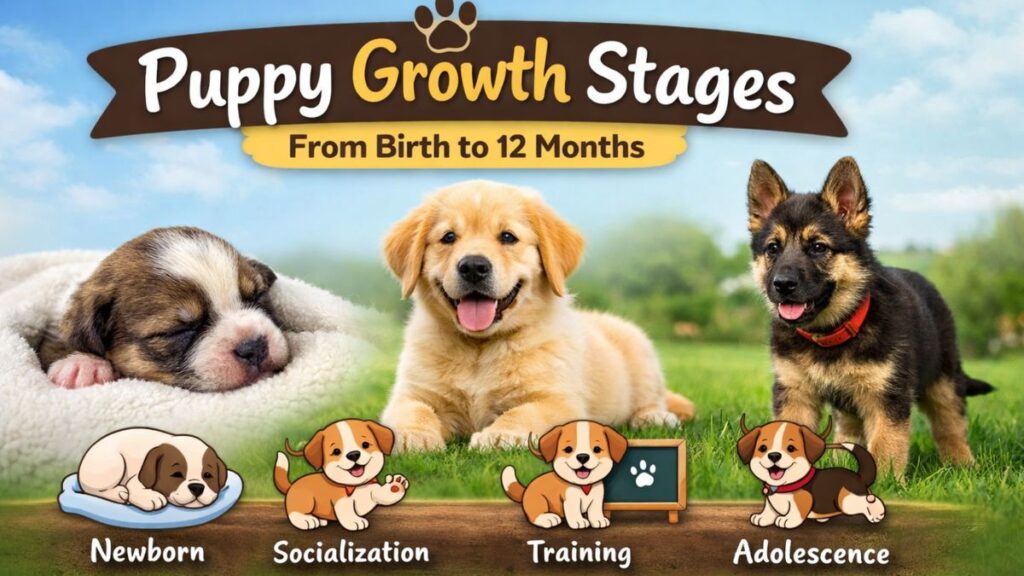
Bringing home a puppy is exciting—but do you really know what’s happening behind those adorable eyes? Understanding Puppy Growth Stages is the secret to raising a healthy, well-behaved dog. From fragile newborn days to energetic teenage months, every stage shapes your puppy’s future personality, behavior, and health.
If you miss key milestones or make early mistakes, it can lead to long-term issues. But don’t worry—this guide breaks everything down step-by-step so you can confidently support your puppy at every phase.
1. Newborn to 8 Weeks: The Foundation Stage
Week 0–2: Neonatal Phase
At this stage, puppies are completely dependent on their mother.
- Eyes and ears remain closed
- Sleep nearly 90% of the time
- Rely on warmth and feeding
Care Tips:
- Keep them warm and undisturbed
- Avoid handling too much
- Ensure proper feeding (mother’s milk is critical)
Week 2–4: Transitional Phase
This is when the magic begins.
- Eyes open, hearing develops
- First attempts at walking
- Start interacting with littermates
Best Practices:
- Introduce gentle human touch
- Keep environment safe and clean
- Avoid loud noises or stress
Week 4–8: Socialization Begins
One of the most important early puppy development stages.
- Play behavior increases
- Teeth start coming in
- Begin learning bite control
Key Benefits of Proper Socialization:
- Reduces fear and aggression later
- Builds confidence
- Improves adaptability
Mistakes to Avoid:
- Separating too early from mother
- Lack of human interaction
2. 2 to 6 Months: Rapid Growth & Learning
2–3 Months: Adjustment Phase
Your puppy is now home—this is where training starts.
- Learning basic commands
- Teething begins
- High curiosity
Step-by-Step Training Guide:
- Start with simple commands: sit, stay
- Use positive reinforcement
- Establish a daily routine
3–4 Months: Social Exploration
This is a critical puppy development timeline by age.
- Increased energy levels
- Exploring surroundings
- Learning boundaries
Expert Tips:
- Introduce new people and pets
- Begin leash training
- Reward good behavior consistently
4–6 Months: Teething & Independence
Your puppy may start testing limits.
- Chewing becomes intense
- Rapid physical growth
- Early signs of dominance
Safety Precautions:
- Provide safe chew toys
- Puppy-proof your home
- Avoid harsh punishment
Common Mistakes:
- Ignoring bad behavior
- Inconsistent training
3. 6 to 12 Months: Adolescence to Maturity
6–9 Months: Teenage Phase
Think of this as the rebellious stage.
- Hormonal changes begin
- Increased independence
- Possible behavioral challenges
Best Practices:
- Stay consistent with training
- Increase physical exercise
- Reinforce obedience commands
9–12 Months: Nearing Adulthood
Your puppy is almost fully grown.
- Physical growth slows down
- Behavior becomes more stable
- Strong bond with owner develops
How to Track Progress:
Use tools like this Puppy Growth Calculator to monitor weight and development:
👉 https://dogcalchub.com/tool/puppy-growth-calculator/
This helps you ensure your dog is growing at a healthy rate and identify issues early.
Key Advantages of Understanding Growth Stages
- Better training results
- Improved health monitoring
- Stronger emotional bond
- Reduced behavioral problems
FAQ:
Q1. When do puppies grow the fastest?
Puppies grow the fastest between 2 to 6 months, especially in height and weight.
Q2. At what age is a puppy fully grown?
Most dogs reach full maturity between 9 to 12 months, but larger breeds may take longer.
Q3. How can I track my puppy’s growth accurately?
You can track weight, size, and milestones using a reliable puppy growth calculator.
Conclusion
Understanding Puppy Growth Stages isn’t just helpful—it’s essential. Each phase, from birth to 12 months, plays a crucial role in shaping your dog’s health, behavior, and personality. By following the right training steps, avoiding common mistakes, and monitoring development, you can raise a happy and well-adjusted dog.