
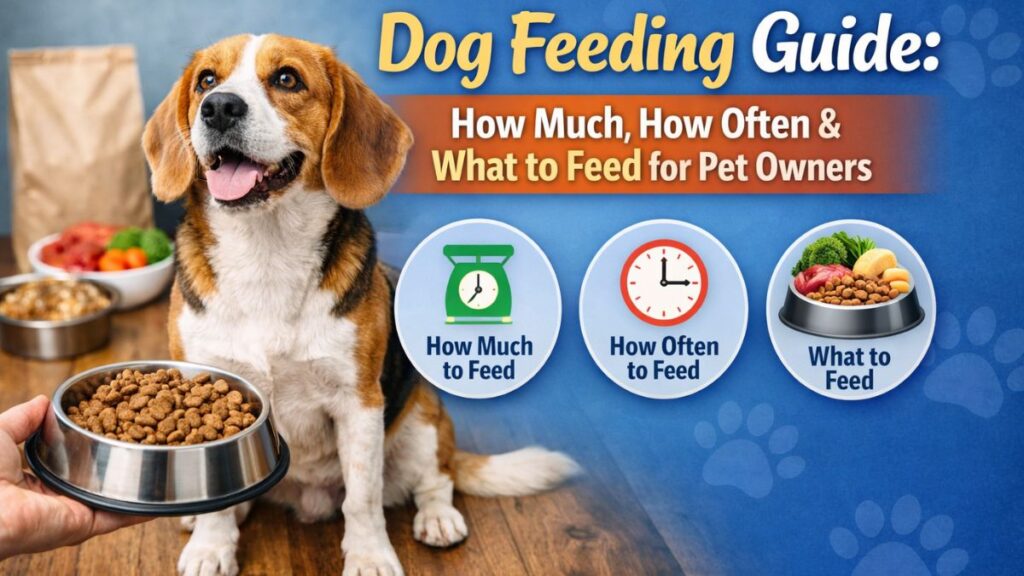
Your dog’s wagging tail, bright eyes, and boundless energy all depend on one powerful factor—nutrition. Yet, many pet owners unknowingly overfeed, underfeed, or choose the wrong diet, leading to long-term health issues. This Dog Feeding Guide will help you understand exactly how much, how often, and what to feed your dog so they stay healthy, active, and happy for years to come.
How Much Should You Feed Your Dog?
Understanding Portion Size
Feeding the right amount isn’t guesswork—it depends on key factors:
- Age (puppy, adult, senior)
- Weight and breed size
- Activity level
- Health condition
A common rule is to follow feeding charts on dog food packaging, but these are just starting points.
Step-by-Step Feeding Calculation
To determine accurate portions:
- Check your dog’s current weight
- Identify daily calorie requirements
- Divide calories across meals
- Adjust based on body condition (not just weight)
👉 For precise results, use this smart tool: Dog Feeding Calculator.
Common Mistakes to Avoid
- Overfeeding treats (hidden calories)
- Ignoring weight gain or loss
- Feeding based on “looks hungry” signals
Pro Tip: You should be able to feel your dog’s ribs but not see them clearly.
How Often Should You Feed Your Dog?
Feeding Frequency by Age
Dogs need different feeding schedules depending on their life stage:
- Puppies (2–6 months): 3–4 meals/day
- Adult dogs: 2 meals/day
- Senior dogs: 2 smaller meals/day
Consistency is key—feed at the same times daily.
Benefits of a Fixed Feeding Routine
- Improves digestion
- Prevents overeating
- Helps with training and behavior
- Creates a sense of security
Things to Avoid
- Free feeding (leaving food out all day)
- Sudden schedule changes
- Feeding right before or after intense exercise
Safety Tip: Wait at least 30–60 minutes after meals before exercise to reduce the risk of bloating.
What Should You Feed Your Dog?
Choosing the Right Food Type
Your dog’s diet should be balanced and nutritious. Options include:
- Dry kibble: Convenient and cost-effective
- Wet food: Higher moisture, great for picky eaters
- Raw diet: Natural but requires careful planning
- Homemade meals: Must be vet-approved for balance
Essential Nutrients Your Dog Needs
A complete diet includes:
- Protein (muscle development)
- Fats (energy and coat health)
- Carbohydrates (energy source)
- Vitamins & minerals (overall health)
- Fresh water (always available)
Best Feeding Practices
- Stick to high-quality, trusted brands
- Introduce new food gradually (over 7 days)
- Monitor allergies or sensitivities
- Avoid toxic foods like chocolate, onions, and grapes
Safety Precautions
- Never feed cooked bones (can splinter)
- Avoid excessive table scraps
- Store food properly to prevent contamination
FAQ:
1. How do I know if I’m feeding my dog enough?
Check their body condition. If ribs are easily felt but not visible, you’re likely feeding the right amount.
2. Can I feed my dog once a day?
It’s not ideal. Most dogs do better with 2 meals daily to maintain energy and digestion.
3. Should I switch dog food regularly?
No. Frequent changes can upset digestion. Only switch when necessary and do it gradually.
Conclusion
Feeding your dog isn’t just about filling a bowl—it’s about fueling a healthy, happy life. By following this Dog Feeding Guide, you can confidently decide how much, how often, and what to feed your furry companion. Small changes in diet and routine can make a huge difference in their long-term health.