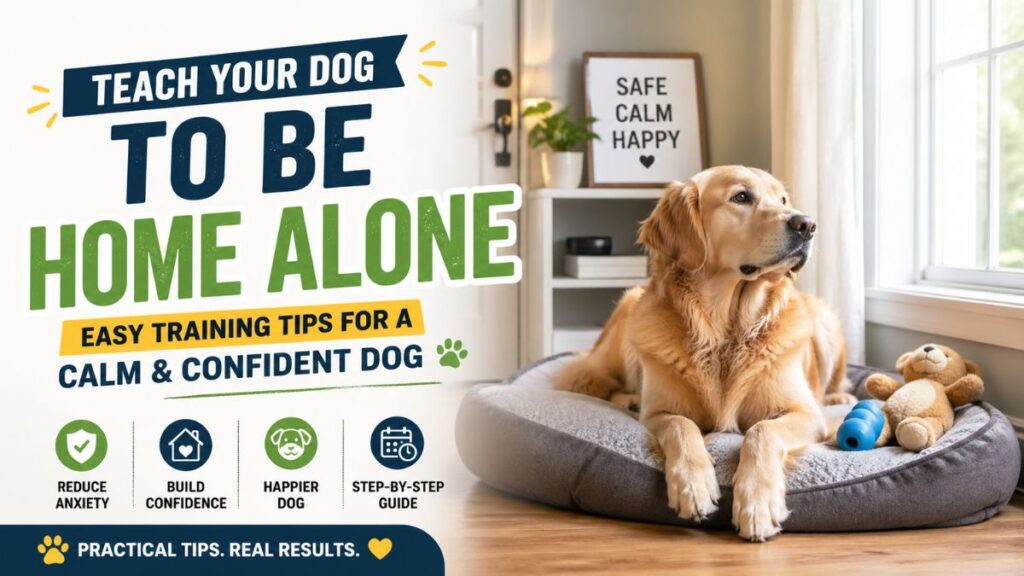
 Your dog waits at the door, eyes full of anxiety the moment you pick up your keys. Sound familiar? Many pet owners struggle with separation stress, but the good news is—you can Teach Your Dog To Be Home Alone without fear, destruction, or guilt. With the right approach, your dog can feel safe, relaxed, and even happy when left alone.
This guide walks you through simple, expert-backed steps to build your dog’s confidence and independence—so you can leave home without worry.
Understanding Why Dogs Struggle With Being Alone
Separation Anxiety vs. Normal Behavior
Not all dogs react the same way to being alone. Some show mild discomfort, while others experience full-blown anxiety.
Signs of separation anxiety include:
- Excessive barking or whining
- Destructive chewing
- Pacing or restlessness
- Accidents indoors
Understanding this difference is key when you train a dog to stay home alone without anxiety.
Root Causes of Anxiety
Dogs are social animals. Common triggers include:
- Sudden changes in routine
- Lack of early training
- Over-attachment to the owner
Why Early Training Matters
Starting early helps prevent long-term behavioral issues. Puppies especially benefit from structured independence training.
Step-by-Step Guide to Teach Your Dog To Be Home Alone
Step 1 – Start With Short Absences
Begin with very short periods:
- Leave the room for 5–10 minutes
- Gradually increase the duration
- Avoid dramatic goodbyes
This builds confidence gradually—key to how to leave your dog home alone safely.
Step 2 – Create a Safe & Comfortable Space
Design a “comfort zone” for your dog:
- Use a crate or a quiet room
- Add favorite toys and bedding
- Keep water accessible
A familiar space reduces stress and promotes calm behavior.
Step 3 – Use Positive Reinforcement
Reward calm behavior:
- Give treats when your dog stays relaxed
- Ignore attention-seeking whining
- Reinforce independence, not clinginess
Step 4 – Establish a Routine
Dogs thrive on consistency:
- Feed, walk, and play at the same times daily
- Schedule alone time practice
This is especially useful for puppy alone training tips for beginners.
Step 5 – Provide Mental Stimulation
Keep your dog busy while you’re away:
- Puzzle toys
- Treat-dispensing toys
- Background noise (TV or music)
Boredom often leads to destructive behavior.
👉 Not sure how long your dog can stay alone? Try this helpful tool: Dog Safe Alone Time Calculator.
Common Mistakes & Expert Tips for Success
Mistakes to Avoid
Avoid these common errors:
- Leaving your dog alone too long too soon
- Punishing anxiety-driven behavior
- Skipping gradual training steps
These can worsen fear and delay progress.
Safety Precautions
Before leaving your dog:
- Remove hazardous items (wires, toxic plants)
- Secure trash bins
- Ensure proper ventilation
Safety is crucial when practicing best ways to reduce dog separation anxiety.
Expert Tips for Faster Results
- Exercise your dog before leaving
- Keep departures low-key
- Use calming aids if needed (vet-approved)
Consistency and patience are your best tools.
FAQs:
1. How long can I leave my dog home alone?
It depends on age and breed. Puppies need shorter durations, while adult dogs can handle 4–6 hours with proper training.
2. Can I crate my dog when I leave?
Yes, if your dog is crate-trained and comfortable. Never force it—make it a positive space.
3. What if my dog still shows anxiety?
Go slower with training. If severe, consult a professional trainer or veterinarian.
Conclusion:
Teaching your dog independence isn’t just about convenience—it’s about their emotional well-being. When you Teach Your Dog To Be Home Alone the right way, you’re building trust, confidence, and a happier life for your furry friend.