
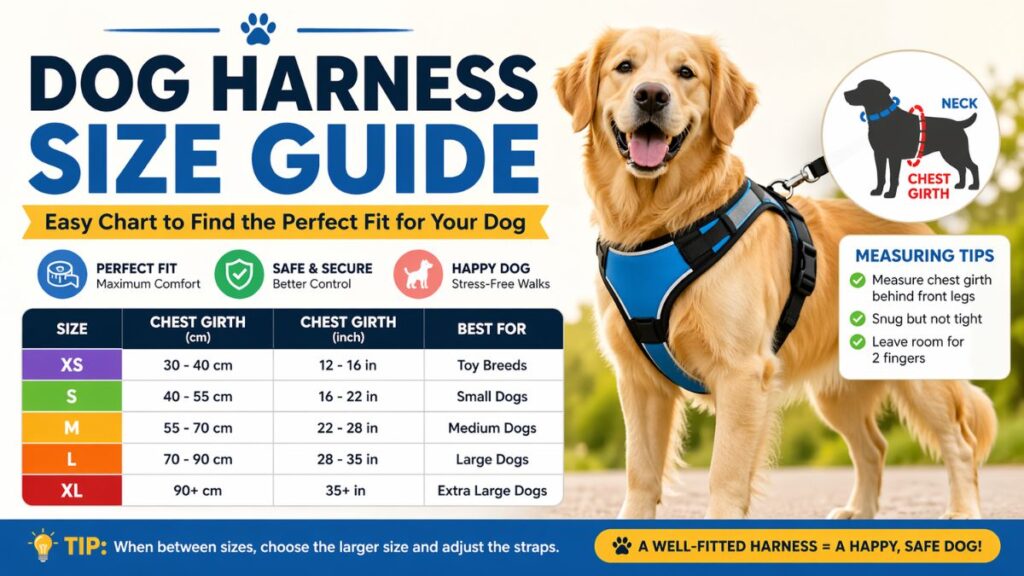
Choosing the wrong harness can turn a simple walk into a stressful experience—for both you and your dog. Too tight, and it causes discomfort or injury. Too loose, and your dog might slip out in seconds. That’s why a reliable Dog Harness Size Guide is essential for every pet owner who wants safety, comfort, and control in one simple step.
If you’ve ever felt confused by sizing charts or unsure how to measure your dog correctly, this guide will walk you through everything—clearly and practically.
How to Measure Your Dog Correctly for a Harness
Chest Girth: The Most Important Measurement
The chest girth is the key factor in any Dog Harness Size Guide. Measure around the widest part of your dog’s rib cage.
Steps:
- Use a soft measuring tape
- Wrap it around the chest (just behind the front legs)
- Ensure it’s snug but not tight
- Leave space for 2 fingers between tape and body
This ensures a comfortable dog harness fit guide approach that avoids pressure points.
Neck Measurement
Some harnesses also require neck size:
- Measure around the base of the neck (not where the collar sits)
- Keep it relaxed—not too tight
Weight & Breed Consideration
While size charts help, breeds differ:
- A muscular dog may need a larger size
- A slim dog might need adjustments
This is why relying only on weight can lead to mistakes in your how to measure dog harness size process.
Dog Harness Size Chart (Easy Reference)
General Size Chart
Here’s a simplified chart to help you get started:
- XS: Chest 30–40 cm (Toy breeds)
- S: Chest 40–55 cm (Small dogs)
- M: Chest 55–70 cm (Medium dogs)
- L: Chest 70–90 cm (Large dogs)
- XL: Chest 90+ cm (Extra large dogs)
Always compare your measurements with brand-specific charts.
Signs of a Perfect Fit
A well-fitted harness should:
- Sit snugly without restricting movement
- Allow two fingers between harness and body
- Stay in place without shifting excessively
This aligns with a proper best harness size for small dogs or large breeds alike.
Signs of a Poor Fit (Avoid These Mistakes)
- ❌ Chafing or red marks
- ❌ Dog slipping out easily
- ❌ Restricted leg movement
- ❌ Excessive pulling discomfort
Ignoring these signs can lead to safety risks and long-term discomfort.
Expert Tips for Choosing the Right Harness
Choose the Right Type
Different harness styles serve different needs:
- Back-clip harness: Ideal for calm walkers
- Front-clip harness: Helps reduce pulling
- Step-in harness: Easy for small or anxious dogs
Pairing the right type with a dog harness fitting tips strategy improves results.
Prioritize Comfort & Safety
Look for:
- Soft padding
- Breathable material
- Adjustable straps
- Strong buckles
A good harness prevents injuries and enhances control.
Test Before Regular Use
Before heading out:
- Let your dog wear it indoors
- Check movement and comfort
- Adjust straps if needed
Use a Smart Tool for Accuracy
Instead of guessing, use a reliable calculator for precise sizing: Try this tool: Dog Harness Size Calculator. It simplifies the entire dog harness size chart by weight and chest process and reduces sizing errors.
FAQs
1. How tight should a dog harness be?
A harness should be snug but not tight. You should be able to fit two fingers between the harness and your dog’s body.
2. Can I choose a harness based only on weight?
No. Weight alone isn’t reliable. Always measure chest girth for accurate sizing.
3. What if my dog is between two sizes?
Choose the larger size and adjust the straps for a comfortable fit.
Conclusion:
Finding the perfect harness isn’t complicated—it just requires the right approach. By following this Dog Harness Size Guide, measuring carefully, and avoiding common mistakes, you can ensure your dog stays safe, comfortable, and happy on every walk.