
Ever wondered how big your adorable puppy will actually get? That tiny ball of fur might look harmless today—but in a few months, it could turn into a full-grown giant! Understanding a Dog Breed Size Chart is one of the smartest things any pet owner can do. It helps you plan better, feed smarter, and ensure your dog lives a healthy, happy life.
Whether you’re adopting a puppy or already have a dog, knowing their expected size and weight range isn’t just helpful—it’s essential.
Understanding Dog Size Categories and Weight Ranges
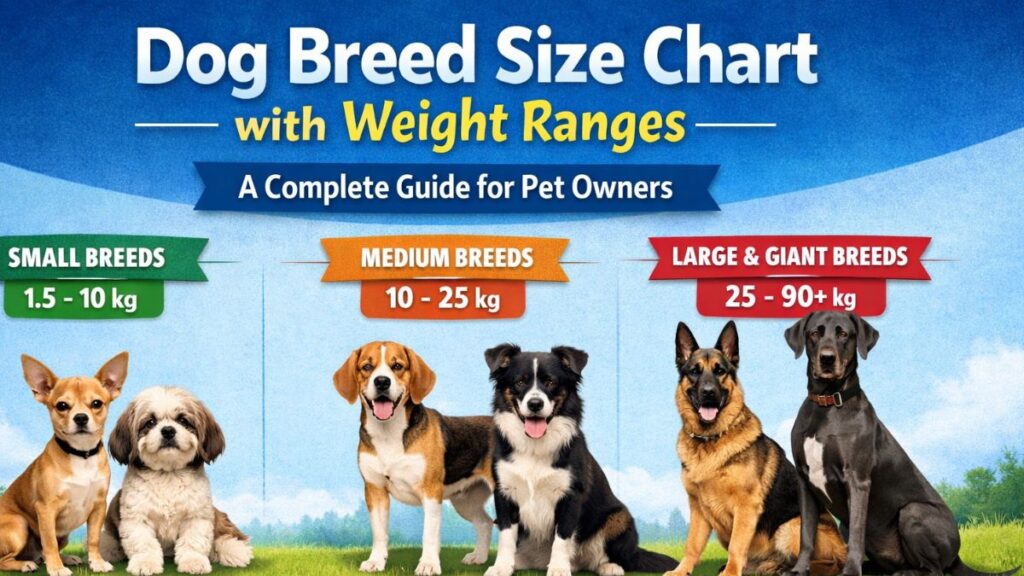
Small Dog Breeds (Under 10 kg)
Small breeds are perfect for apartments and low-space homes.
Examples include:
- Chihuahua
- Pomeranian
- Shih Tzu
Typical weight range:
- 1.5 kg to 10 kg
Key traits:
- Low food consumption
- Easy to carry and travel with
- Require moderate exercise
Medium Dog Breeds (10–25 kg)
Medium-sized dogs strike the perfect balance between energy and manageability.
Examples include:
- Beagle
- Cocker Spaniel
- Border Collie
Typical weight range:
- 10 kg to 25 kg
Key traits:
- Active and playful
- Suitable for families
- Require regular exercise
Large & Giant Dog Breeds (25+ kg)
These breeds are powerful, loyal, and need more space and care.
Examples include:
- Labrador Retriever
- German Shepherd
- Great Dane
Typical weight range:
- 25 kg to 90+ kg
Key traits:
- High food and space requirements
- Strong guarding instincts
- Need consistent training
How to Use a Dog Breed Size Chart Effectively
Step-by-Step Guide
Using a Dog Breed Size Chart with weight ranges is simple if you follow these steps:
- Identify your dog’s breed (or closest mix)
- Check average adult weight range
- Compare with current weight
- Track growth over time
- Adjust diet and exercise accordingly
Benefits of Using a Dog Size Chart
- Helps predict adult dog weight by breed
- Assists in choosing the right food portion
- Prevents overfeeding or underfeeding
- Supports long-term health planning
Common Mistakes to Avoid
- Assuming all dogs of the same breed weigh the same
- Ignoring mixed breed variations
- Overfeeding puppies “to make them grow faster”
👉 Want a more accurate estimate? Try this smart tool: Dog Size Predictor. It’s a simple way to calculate your dog’s future size using real data.
Expert Tips for Managing Your Dog’s Growth
Feeding Best Practices
- Use breed-specific or size-specific dog food
- Follow feeding guidelines based on weight
- Avoid excessive treats
Exercise Recommendations
- Small dogs: Short walks + indoor play
- Medium dogs: Daily walks + active play
- Large dogs: Structured exercise + training
Safety Precautions
- Avoid over-exercising puppies (can damage joints)
- Monitor weight regularly
- Consult a vet for sudden weight changes
Pro Tip for Mixed Breeds
If your dog is a mix, estimating size can be tricky. Use:
- Parent breed information
- Paw size (larger paws often mean larger adult size)
- Growth patterns
FAQ:
1. How accurate is a Dog Breed Size Chart?
It provides a strong estimate, but individual factors like diet, genetics, and health can affect final size.
2. Can I predict my puppy’s adult size?
Yes! Using tools like a dog size and weight guide for puppies can give reliable predictions.
3. Why is my dog smaller or bigger than the chart?
Mixed breeding, nutrition, and health conditions can influence growth beyond standard ranges.
Conclusion
A Dog Breed Size Chart isn’t just a reference—it’s your roadmap to responsible pet ownership. From feeding and exercise to space and care, understanding your dog’s size helps you make better decisions every day.