
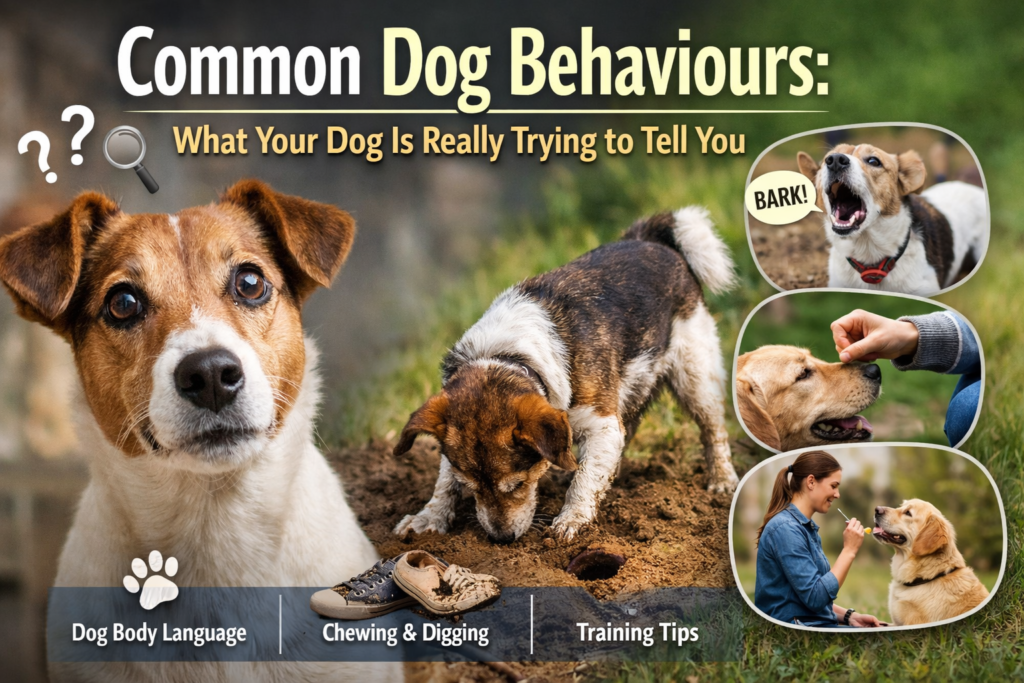
Ever wondered why your dog suddenly starts barking at nothing, digging up your garden, or wagging their tail in a confusing way? Understanding Common Dog Behaviours isn’t just interesting—it’s essential for building a strong, happy bond with your pet. Dogs communicate differently than humans, and what may seem “bad behavior” is often a message waiting to be understood.
If you learn to decode these signals, you can prevent problems, improve training, and make your dog feel safer and happier.
Understanding Everyday Dog Behaviours
Why Dogs Bark, Growl, and Whine
Dogs use vocal sounds as their primary communication tool. Each sound has a meaning:
- Barking: Alert, excitement, boredom, or warning
- Growling: Fear, protection, or discomfort
- Whining: Anxiety, attention-seeking, or pain
Tip: Don’t punish vocalization immediately. First, identify the cause.
Tail Wagging Isn’t Always Happiness
Many people assume wagging = happy dog. That’s not always true.
- Fast wag + relaxed body = Friendly
- Slow wag + stiff posture = Caution
- Tail tucked = Fear or stress
Common Body Language Signals
Understanding body language helps prevent accidents:
- Ears forward: Curious or alert
- Ears back: Nervous or submissive
- Yawning: Stress signal (not always tiredness)
Problem Behaviours and What They Mean
Why Dogs Chew Everything
Chewing is natural, especially in puppies.
Reasons include:
- Teething pain
- Boredom
- Anxiety
Solution (step-by-step):
- Provide chew toys
- Remove tempting items
- Reward correct chewing behavior
Digging and Destructive Behaviour
Dogs dig for multiple reasons:
- To cool down
- To hide food
- Due to boredom
Best Practice:
Create a designated digging area instead of punishing the dog.
Excessive Barking: How to Control It
This is one of the most searched topics: “how to stop dog barking at night.”
Actionable steps:
- Identify triggers (strangers, noise, loneliness)
- Increase exercise and mental stimulation
- Use positive reinforcement training
Common Mistake: Yelling at your dog—it actually encourages barking.
Training Tips to Manage Dog Behaviour Effectively
Positive Reinforcement Works Best
Reward good behavior instead of punishing bad behavior.
- Treats
- Praise
- Playtime
This builds trust and encourages repetition of good habits.
Create a Daily Routine
Dogs thrive on consistency.
- Fixed feeding times
- Regular walks
- Scheduled playtime
This reduces anxiety and unwanted behaviors.
Safety Precautions Every Owner Should Follow
Some behaviors can be risky if ignored:
- Aggression toward strangers
- Food guarding
- Sudden behavioral changes
Important: Consult a vet or trainer if behavior becomes extreme.
Track and Improve Behaviour Over Time
If you’re serious about improving your dog’s habits, tracking patterns helps a lot. You can use this simple tool: Dog Behavior Tracker. It helps you identify triggers, monitor progress, and build better routines.
FAQ:
1. Why does my dog follow me everywhere?
Dogs are social animals. Following you shows attachment, curiosity, or separation anxiety.
2. Is it normal for dogs to eat grass?
Yes, in most cases. It may help digestion or simply be a habit. However, frequent vomiting should be checked.
3. How can I stop destructive behavior when I’m not home?
- Provide toys
- Use crate training
- Ensure enough exercise before leaving
Conclusion:
Understanding Common Dog Behaviours isn’t just about fixing problems—it’s about building trust and communication. When you recognize what your dog is trying to say, everything changes. Training becomes easier, your dog feels more secure, and your relationship grows stronger.